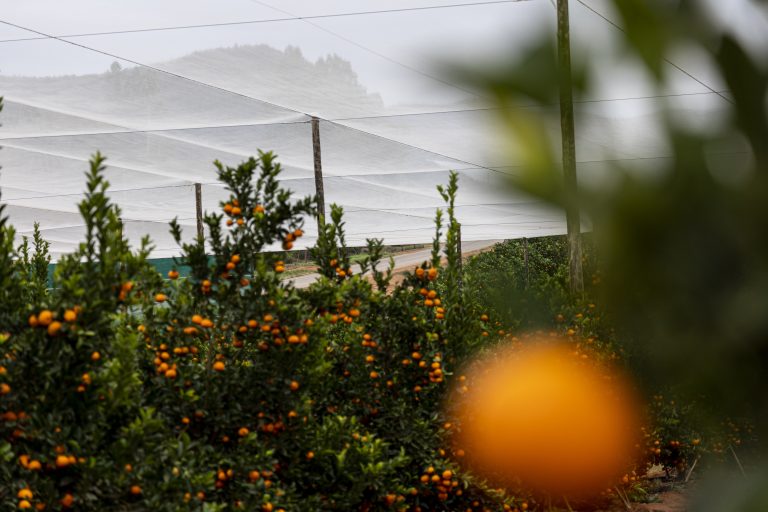
Citrus farming is a long-term investment.
From land preparation and cultivar selection to irrigation infrastructure and export logistics, every hectare represents years of planning and capital deployment. Yet, in export-focused citrus production, it is often the smallest imperfection — a minor scar, slight sunburn or superficial hail mark — that determines whether fruit achieves premium international pricing or is downgraded to the local market.
In global export markets, there is no margin for surface damage.
The difference between export grade and downgrade is not cosmetic. It is financial.
The export standard reality
Export citrus operates within strict visual and quality parameters. Importing countries enforce cosmetic standards that protect retailer expectations and brand consistency. Even fruit that is internally sound can be downgraded due to superficial blemishes.
Even a modest shift in pack-out can significantly impact profitability.
For exporters, packhouse performance is not just an operational metric — it is a direct indicator of orchard profitability. When Class 1 fruit declines in a season affected by hail or excessive sun exposure, the revenue impact compounds quickly across hectares.
The export market does not price sympathy.
It prices consistency.
The hidden cost of surface damage
Hail events, excessive UV exposure and wind abrasion are among the most common causes of cosmetic damage in citrus orchards. While catastrophic storms draw attention, it is often the moderate, repeated exposure to environmental stress that erodes margins over time.
Consider the financial mechanics:
- Export-grade citrus commands a premium price.
- Downgraded fruit may be redirected to local markets at reduced pricing.
- Severely damaged fruit may be written off entirely.
Even without exact figures, the structural risk is clear: margin volatility increases as environmental exposure increases.
For a mid-sized citrus operation, a single season of elevated downgrade rates can offset years of operational efficiency gains. And unlike input costs, weather-related downgrades cannot be negotiated.
They must be mitigated.
Climate volatility and margin instability
Climate patterns are becoming less predictable. Increased frequency of hail events, prolonged heatwaves and intensified UV exposure place export orchards under growing pressure.
Exporters face a dual challenge:
- Maintaining fruit quality under environmental stress.
- Delivering consistent volumes to international markets despite variability.
When orchards are exposed, revenue becomes reactive to weather patterns. Yield may remain stable, but exportable yield fluctuates.
There is a critical difference between total harvest and export pack-out.
Protected orchards, by contrast, reduce variability. They shift production from exposure-based risk to managed microclimate conditions. This does not eliminate weather events — but it significantly reduces their financial impact.
Microclimate management as strategy
High-performance, UV-stabilised HDPE monofilament knitted netting systems do more than prevent direct hail impact.
They create a moderated growing environment.
Strategic netting reduces:
- Direct hail strike intensity
- Excessive UV exposure leading to sunburn
- Wind-driven abrasion and fruit scarring
The result is improved fruit surface integrity and greater export consistency.
For exporters, this translates into:
- A higher proportion of Class 1 fruit
- More predictable packhouse performance
- Reduced year-on-year downgrade volatility
Microclimate management is no longer an optional enhancement.
It is becoming an infrastructure strategy.
Infrastructure vs reactive recovery
Traditionally, many growers have relied on insurance to offset catastrophic events. Insurance remains important — but it is reactive by nature.
It compensates after loss.
Physical protection, by contrast, is preventative. It reduces the probability and severity of downgrade events before they occur.
The financial distinction matters:
Insurance addresses recovery.
Infrastructure addresses stability.
For export-focused citrus producers, stability carries long-term value. Buyers, exporters and international partners depend on consistency in both quality and supply. An orchard that consistently produces export-grade fruit builds commercial reliability.
In competitive markets, reliability is an asset.
The long-term perspective
When evaluating protective infrastructure, the conversation often begins with cost per hectare. But for permanent crops such as citrus, the more relevant lens is lifecycle performance.
A well-designed, properly installed knitted netting system manufactured from UV-stabilised HDPE monofilament is engineered for durability. Over an extended operational lifespan, the initial capital investment is distributed across multiple seasons.
The key financial questions for exporters should be:
- What is the cumulative value of improved export pack-out over time?
- What is the avoided cost of a severe downgrade season?
- What is the value of predictable export volumes in long-term contracts?
- How does infrastructure protection support orchard asset valuation?
When viewed over time, netting transitions from perceived cost to margin stabilisation tool.
And margin stability is a strategic advantage.
Orchard value and long-term asset protection
Citrus orchards are capital assets. Their valuation is influenced not only by tree age and yield potential, but by infrastructure resilience.
Protected orchards demonstrate:
- Reduced exposure risk
- Improved fruit quality consistency
- Lower financial volatility
In an environment where agricultural investments are increasingly scrutinised for risk-adjusted returns, physical crop protection strengthens the orchard’s profile.
Protection is not merely operational.
It is strategic.
From exposure to control
Export citrus production will always operate within natural systems. Weather cannot be controlled. But its financial impact can be moderated.
The distinction between exposed and protected orchards is not aesthetic.
It is measurable.
It is reflected in pack-out performance, contract reliability and margin preservation.
In a global market where fruit presentation determines pricing power, cosmetic integrity carries disproportionate financial weight.
The question for exporters is no longer whether environmental risk exists.
It is whether that risk is being managed proactively.
Protecting what you’ve grown — Protecting where it ships
Every export orchard represents years of cultivation, capital and commitment. Protecting that investment requires infrastructure that matches the scale of that commitment.
In export citrus, the difference between grade and downgrade is measured in millimetres.
But its impact is measured in millions.
When protection becomes part of production strategy, exporters move from reactive risk management to structured margin control.
And in a climate of increasing volatility, control is not a luxury.
It is a competitive necessity.